
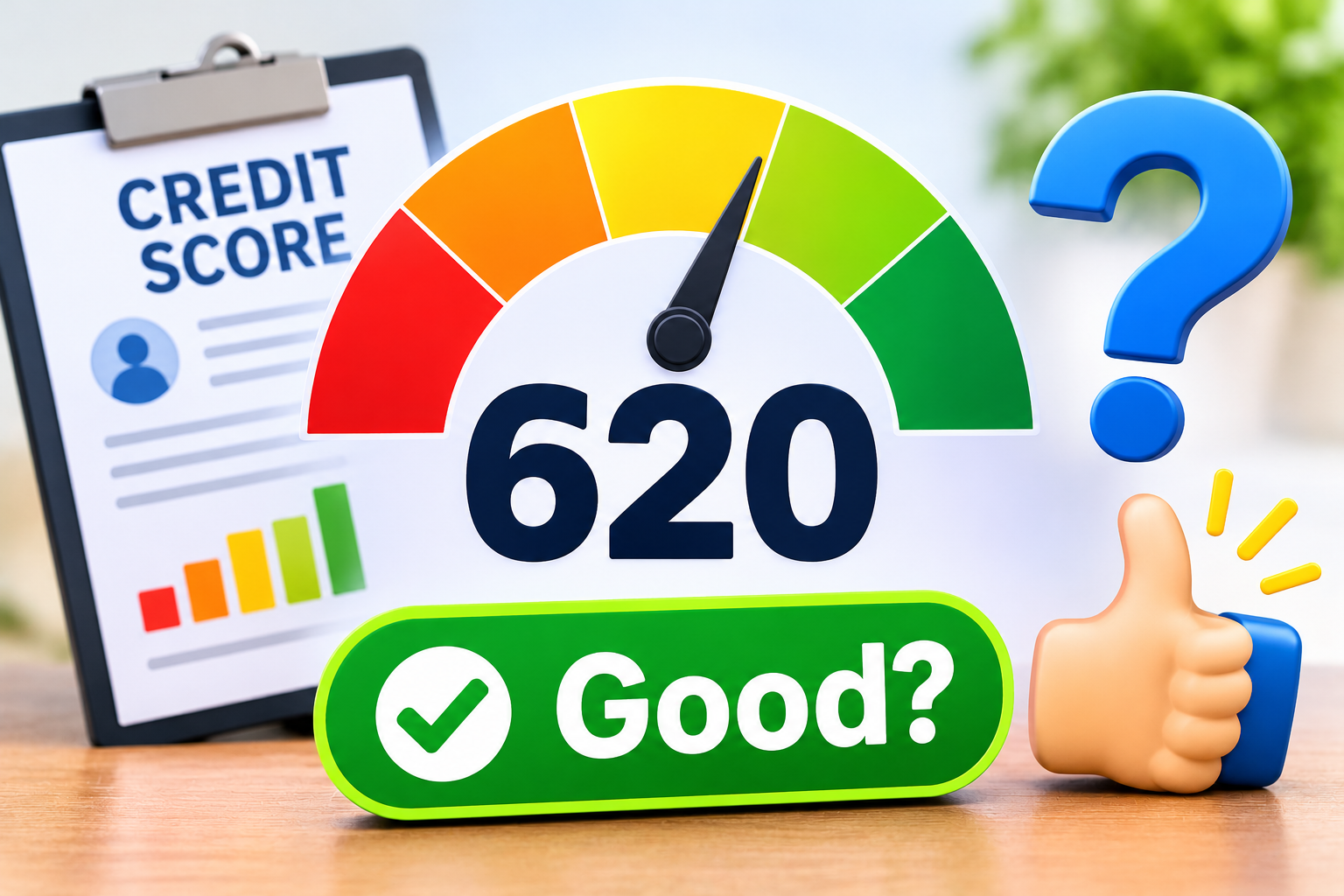
A 620 credit score is generally considered a fair credit score under the standard FICO scoring model. It is not classified as good credit, but it is also not in the poor category. With a 620 score, you may qualify for certain credit cards, personal loans, auto financing, and some mortgage programs. However, your borrowing options may be limited, and lenders could charge higher interest rates or require additional financial documentation.
A credit score of 620 represents an important middle point for people working to rebuild their credit. It is above the poor-credit range but still below the level that many lenders prefer for their most competitive offers. Understanding what this score means, how lenders evaluate it, and which steps can improve it can help you make better financial decisions.
Whether you want to purchase a car, apply for a mortgage, qualify for a new credit card, or improve your overall financial standing, knowing how a 620 credit score affects your opportunities is a useful starting point.
Is 620 a Good Credit Score?
A 620 credit score is considered fair under the standard FICO scoring system, which ranges from 300 to 850. FICO generally classifies scores between 580 and 669 as fair, while scores between 670 and 739 are considered good.
This means a 620 score is not necessarily a barrier to getting credit, but it may make borrowing more expensive. Some lenders accept applicants with scores around 620, while others prefer applicants with higher scores.
Your approval chances also depend on factors beyond your credit score. Lenders may review your income, employment stability, debt-to-income ratio, payment history, existing financial obligations, and the type of credit you are requesting.
How does 620 compare with the average credit score?
According to FICO’s Fall 2026 Credit Insights report, the average U.S. FICO score was 714. A 620 score is therefore below the national average.
However, being below average does not mean you cannot qualify for financial products. It means you may need to compare lenders carefully and demonstrate that you can manage new payments responsibly.
Understanding the Credit Score Ranges
To understand where 620 stands, it helps to compare it with the commonly used FICO credit score categories.
| FICO Credit Score | Rating |
| 300–579 | Poor |
| 580–669 | Fair |
| 670–739 | Good |
| 740–799 | Very Good |
| 800–850 | Exceptional |
A 620 score falls within the fair category. Moving toward 670 can help you enter the good credit range and potentially improve your borrowing opportunities.
It is also important to understand that VantageScore uses different category ranges. Under VantageScore 3.0 and 4.0, a score of 620 is generally considered fair as well. Always check which scoring model a lender or credit monitoring service uses before comparing scores.
What Can You Get Approved for With a 620 Credit Score?
A 620 credit score may qualify you for several financial products, but approval depends on the lender’s requirements and your complete financial profile.
Personal loans
Some lenders offer personal loans to applicants with fair credit. With a 620 score, you may qualify for certain unsecured or secured personal loan products.
However, you may receive a higher interest rate than borrowers with good or excellent credit. Lenders may also consider your income, current debt, employment history, and requested loan amount.
Before accepting a loan, compare the annual percentage rate, origination fees, repayment period, and total interest cost. A smaller monthly payment is not always the cheapest option if the repayment term is much longer.
Auto loans
A 620 credit score may be enough to qualify for an auto loan through certain banks, credit unions, dealerships, and specialized auto lenders.
Your interest rate may be higher than the rate offered to someone with a score above 700. A larger down payment can sometimes strengthen your application because it reduces the amount you need to borrow.
Before purchasing a vehicle, compare financing offers from multiple lenders. Consider the total loan cost, not just the monthly payment.
Mortgage loans
A 620 credit score may provide access to some mortgage opportunities, including certain conventional mortgage programs and government-backed options.
Fannie Mae’s April 2026 Selling Guide lists a 620 minimum score for manually underwritten fixed-rate loans, while automated underwriting decisions follow different eligibility assessments. Actual requirements depend on the loan program, underwriting result, lender policies, and other factors.
FHA loans may also be an option for borrowers with lower scores. Under standard FHA guidelines, borrowers with scores of 580 or higher may qualify for a 3.5% minimum down payment, subject to eligibility requirements and lender standards.
However, meeting a minimum score does not guarantee approval. Mortgage lenders also review income, debt-to-income ratio, assets, employment, and property requirements.
Credit cards
You may qualify for some unsecured credit cards with a 620 credit score, although approval is not guaranteed. Some issuers offer cards specifically designed for people with fair credit.
You may receive a lower credit limit, fewer rewards, or a higher interest rate than applicants with stronger credit profiles.
A secured credit card is another option. It requires a refundable security deposit and can help establish a positive payment history when the issuer reports account activity to the major credit bureaus.
Can You Buy a House With a 620 Credit Score?
Yes, buying a house with a 620 credit score may be possible. Several mortgage programs and lenders consider applicants around this score level.
Your options will depend on the mortgage type, down payment, income, debt obligations, and lender requirements.
Conventional mortgage loans
Some conventional mortgage programs may accept borrowers with a 620 score, particularly when the application meets the applicable underwriting requirements.
However, a lender may prefer a higher score for more competitive pricing. Your down payment, debt-to-income ratio, cash reserves, and overall credit history can influence the final decision.
FHA mortgage loans
FHA loans are designed to provide more flexible qualification opportunities for eligible borrowers. Under standard FHA guidelines, a credit score of 580 or higher may qualify for a down payment as low as 3.5%.
A 620 score is above that general threshold, but other requirements still apply. Mortgage insurance is also required for FHA loans.
VA and USDA loans
Eligible borrowers may also explore VA or USDA mortgage programs. These programs have their own eligibility and underwriting requirements.
The federal program guidelines and individual lender requirements may differ. Some lenders impose minimum credit scores even when the broader program does not establish the same universal minimum.
Before applying, ask lenders to review your credit profile and provide estimates for the loan programs you may qualify for.
Can You Get a Car Loan With a 620 Credit Score?
A 620 credit score can make getting an auto loan possible, but the terms may not be as favorable as those available to borrowers with higher scores.
Auto lenders often evaluate your credit history, income, existing debt, down payment, vehicle price, and loan term.
What interest rate can you expect?
There is no single interest rate assigned to a 620 score. Auto loan rates change with market conditions and vary by lender, vehicle type, loan term, and borrower profile.
A borrower with a 620 score may receive a higher rate than someone with a score of 740 or 800. This difference can increase the total amount paid over the life of the loan.
How can you improve your auto loan chances?
Consider taking these steps before applying:
- Save for a larger down payment.
- Reduce outstanding credit card balances.
- Pay all current bills on time.
- Check your credit reports for inaccurate information.
- Compare offers from banks, credit unions, and dealerships.
- Choose a vehicle that fits your budget.
If you can wait before purchasing a vehicle, improving your credit score may help you qualify for more favorable financing.
What Causes a 620 Credit Score?
A 620 credit score can result from several credit-related issues. Sometimes it reflects a limited credit history, while in other cases it indicates previous financial difficulties.
Late payments
Payment history is one of the most important factors in FICO scoring. Missing payments on credit cards, personal loans, auto loans, or other reported accounts can negatively affect your score.
The more recent and serious the missed payment, the more concerning it may appear to lenders.
High credit utilization
Credit utilization measures how much of your available revolving credit you are using.
For example, if your credit card limit is $2,000 and your balance is $1,400, your utilization is 70%. High utilization may make lenders view you as more dependent on borrowed money.
Keeping balances low relative to your limits can support a healthier credit profile.
Collection accounts
Unpaid debts transferred to collection agencies may appear on your credit reports. These accounts can affect how lenders evaluate your application.
Review collection information carefully to make sure the debt belongs to you and the reported amount is correct.
Short credit history
A limited credit history can make it harder for scoring models to evaluate your borrowing behavior. If you have recently opened your first credit card or loan, you may not have enough established history to demonstrate long-term credit management.
Too many credit applications
Applying for multiple credit cards and loans within a short period can lead to several hard inquiries. These inquiries may temporarily lower your score and can make your credit profile appear riskier.
How to Improve a 620 Credit Score
If your score is currently 620, you have an opportunity to move toward the good credit range. The most effective approach is to identify the factors affecting your score and make consistent improvements.
1. Review your credit reports
Start by checking your reports from Equifax, Experian, and TransUnion. In the United States, you can access free reports through AnnualCreditReport.com.
Look for incorrect payment records, unfamiliar accounts, duplicate collection entries, inaccurate balances, and reporting mistakes.
If you discover an error, dispute it with the relevant credit bureau and the company that provided the information. Removing inaccurate negative information may help improve your credit profile.
2. Pay every bill on time
Make on-time payments a priority. Payment history has a significant influence on traditional FICO scores.
Set up automatic minimum payments or calendar reminders so you do not forget due dates. If you are struggling to pay a bill, contact the creditor before the account becomes seriously overdue.
3. Reduce credit card balances
High credit utilization can make it harder to improve your score. Focus on reducing balances, especially on cards that are close to their credit limits.
A commonly recommended goal is to keep utilization below 30%, although lower utilization may be better for scoring.
For example, if you have a $3,000 credit limit, keeping the reported balance below $900 would place utilization under 30%.
4. Avoid unnecessary new credit applications
Do not apply for several credit cards simply because you want to increase your available credit.
Each application may result in a hard inquiry. Too many applications in a short period can make your credit profile look less stable.
Research eligibility requirements and consider soft-inquiry prequalification options when available.
5. Keep older accounts open when appropriate
The length of your credit history can contribute to your score. Closing older credit cards may reduce your available credit and increase utilization on the accounts you continue using.
If an older account has no annual fee and you can manage it responsibly, keeping it open may be beneficial.
6. Consider a secured credit card
If you have difficulty qualifying for an unsecured credit card, a secured card may provide an opportunity to build positive payment history.
Choose a card that reports to the major credit bureaus. Make small purchases and pay the statement balance on time.
Carrying a balance and paying interest is not necessary to build credit.
7. Manage collection accounts responsibly
If you have collection accounts, verify their accuracy before making payment arrangements. Dispute information that is incorrect or does not belong to you.
For legitimate debts, contact the collection agency to discuss available repayment options. Get any settlement or payment agreement in writing.
Remember that paying a collection account does not guarantee a specific increase in your credit score. The impact depends on the scoring model and your overall credit history.
How Long Does It Take to Improve a 620 Credit Score?
The time required to improve a 620 credit score depends on the reasons behind it.
If your score is mainly affected by high credit card balances, reducing those balances may produce changes after creditors report updated information. If your credit report includes recent missed payments, defaults, or collection accounts, rebuilding may take longer.
Here are some general credit score milestones to work toward:
| Credit Score Goal | Credit Category |
| 620–669 | Fair |
| 670–739 | Good |
| 740–799 | Very Good |
| 800–850 | Exceptional |
Your first target should be reaching 670. This moves you into the good FICO category. From there, you can work toward 740 and eventually 800.
There is no guaranteed timeline or fixed number of points you will gain. Consistent positive behavior matters more than trying to make rapid changes.
620 Credit Score vs. 650, 670, and 700
Comparing different credit scores helps explain how your borrowing opportunities may change as your credit profile improves.
620 credit score: This falls within the fair FICO category. You may qualify for some financial products, but interest rates and approval conditions may be less favorable.
650 credit score: This is also considered fair. It may provide better opportunities than a 620 score, depending on your overall credit history and lender requirements.
670 credit score: This is the starting point of the good FICO category. Reaching this level may improve your access to credit products and competitive offers.
700 credit score: This falls within the good category and may help you qualify for more favorable loan and credit card terms. Other financial factors still influence approval and pricing.
Improving from 620 to 670 is a useful goal because it moves you into a higher FICO category.
Does a 620 Credit Score Affect Apartment Rentals?
A 620 credit score may affect your ability to rent an apartment, but it does not automatically prevent you from getting approved.
Landlords and property managers use different screening standards. Some review credit scores and payment history, while others place more importance on income, employment, rental references, and previous evictions.
If your credit score is 620, prepare documents that demonstrate your financial stability. Recent pay stubs, employment verification, bank statements, and references from previous landlords may strengthen your application.
Some landlords may also consider a co-signer or additional security arrangements where legally permitted.
Conclusion
A 620 credit score is considered fair under the standard FICO scoring system. It may allow you to qualify for certain credit cards, auto loans, personal loans, and mortgage programs, but you may not receive the lowest interest rates or most favorable terms. The good news is that a 620 score provides a foundation for further improvement. Review your credit reports, pay every bill on time, reduce credit card balances, and avoid unnecessary applications. Your next major milestone should be reaching 670, which marks the beginning of the good FICO category. With consistent financial habits and responsible credit management, you can gradually build a stronger credit profile.
Frequently Asked Questions
1. Is 620 a good credit score?
A 620 credit score is considered fair under the standard FICO model. It is above the poor category but below the good range, which begins at 670. You may qualify for some financial products, although interest rates and terms may not be the most competitive.
2. Can I buy a house with a 620 credit score?
Yes, it may be possible to buy a house with a 620 credit score. Certain conventional mortgage programs and FHA loans may accept borrowers around this score level. Approval also depends on your income, debt-to-income ratio, down payment, and lender requirements.
3. Can I get a car loan with a 620 credit score?
Yes. Some banks, credit unions, dealerships, and auto finance companies consider applicants with a 620 score. However, your interest rate may be higher than the rate offered to borrowers with stronger credit.
4. How long does it take to raise a 620 credit score to 700?
There is no fixed timeline. It may take several months or longer, depending on your credit history, outstanding balances, payment behavior, and negative information. Paying bills on time and reducing credit utilization can support gradual improvement.
5. What is the fastest way to improve a 620 credit score?
Start by reviewing your credit reports for errors, paying all bills on time, and reducing high credit card balances. Avoid unnecessary hard inquiries and manage existing accounts responsibly. These actions can help strengthen your credit profile over time.